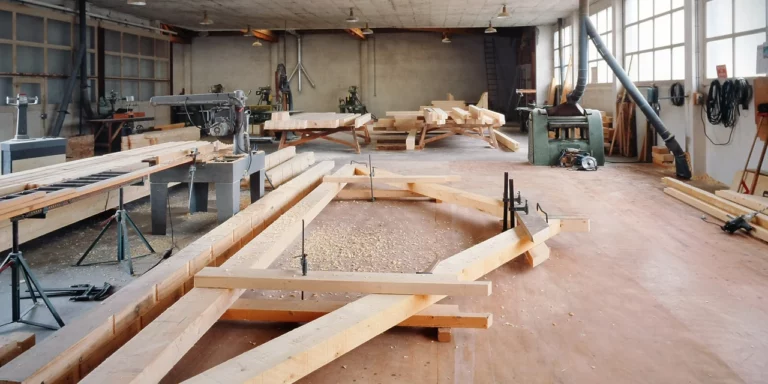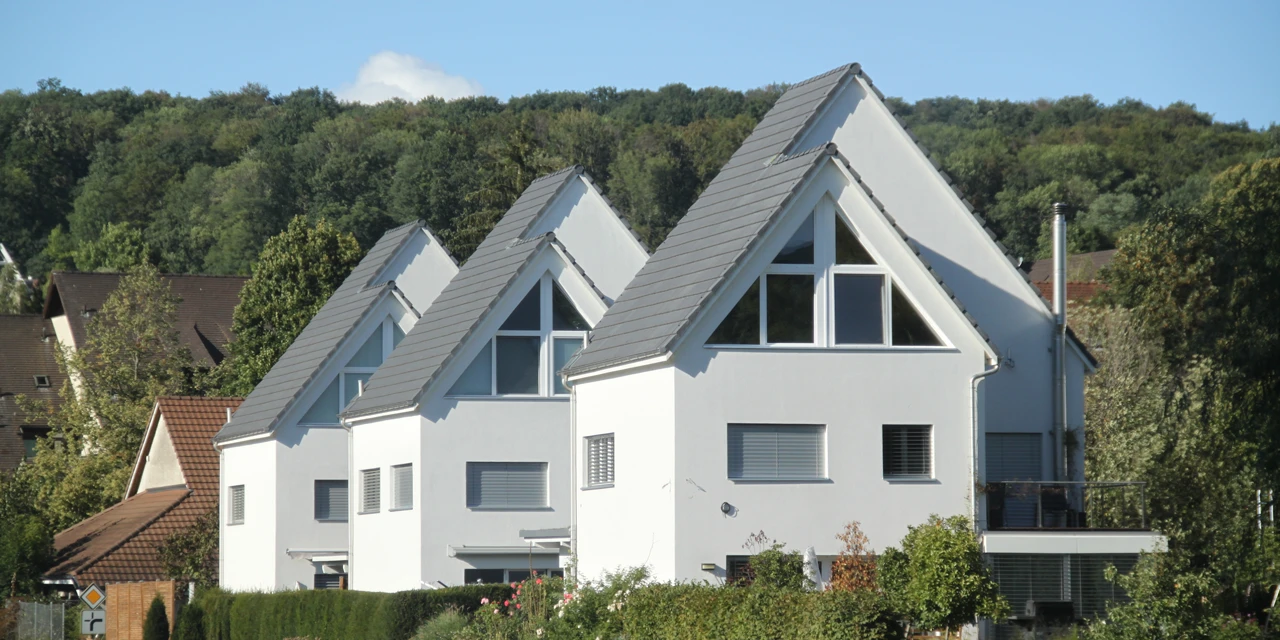
A foreign entrepreneur can set up a real estate development company in Geneva, but two laws decide the project before any bank looks at it. The federal Lex Koller bars a company controlled from abroad from buying land to build homes, while leaving offices, shops and hotels open. Geneva’s LDTR requires a permit for most work on occupied residential buildings and restricts the sale of rented flats. On top of these come the building permit rules of the LCI and, since 1 January 2026, a five-year defect liability towards buyers. This guide takes each rule in turn for a founder arriving from abroad.
Contents
- What a development company actually does
- Lex Koller in Geneva: who may buy what
- The Geneva building permit under the LCI
- Occupied housing and the LDTR
- Selling units: public deed and the 2026 warranty
- Paying contractors without a lien on your land
- VAT and the tax on property gains
- Setting up the company
- FAQ
What a real estate development company in Geneva actually does
A development company buys a plot or an existing building, applies for the permits, finances the scheme, appoints an architect and contractors, then sells the units. On site it is the project owner; at the notary’s office it is the seller.
That combination sets it apart from two neighbouring trades. A broker earns a commission for bringing a buyer and never owns the building. A construction company or general contractor carries out the works it is commissioned to do. If your plan is to build for other clients, our guide to setting up a construction company in Geneva covers that side of the market.
For a founder coming from abroad, the first question is what the company may buy, and that depends on who holds the capital.
Lex Koller in Geneva: who may buy what
The Lex Koller, formally the Federal Act on the Acquisition of Immovable Property in Switzerland by Foreign Non-Residents, makes any purchase of property by a foreign non-resident subject to authorisation by the competent cantonal authority (Art. 2(1)). Authorisation is refused in every case where the property would be an investment of capital that the Act does not allow (Art. 12(a)). Building flats in order to sell them falls into that category.
The general grounds for authorisation listed in Art. 8 are narrow: insurers, staff pension schemes, banks recovering secured claims, heirs and cases of hardship. None of them fits a developer who builds homes for sale. Buying shares in an unlisted property company counts as an acquisition too (Art. 4(1)(e)).
Your company can itself be “foreign”
The Act looks beyond the founder’s passport. A company registered in Geneva counts as a foreign non-resident when foreign non-residents hold a controlling interest in it (Art. 5(1)(c)). Control is presumed when they own more than a third of the share capital, hold more than a third of the votes, or have lent the company repayable funds worth more than half the gap between its assets and its debts to persons who need no authorisation (Art. 6(2)).
Residence weighs as much as nationality. An EU or EFTA citizen who is legally and actually resident in Switzerland is not a foreign non-resident, and the same holds for a citizen of any other country who has the right to settle permanently, in practice the C permit (Art. 5(1)(a) and (abis)). The authorities will read your share register and shareholder loans with this in mind.
| Founder’s situation | Homes to build or sell | Offices, shops, hotels |
|---|---|---|
| EU or EFTA founder resident in Geneva, company controlled by them | Open: not a foreign non-resident | Open |
| Founder from outside Europe holding a C settlement permit | Open: right to settle permanently | Open |
| Founder living in the Gulf or elsewhere abroad with more than a third of the capital | Closed: prohibited investment of capital | Open, no authorisation needed |
| Foreign-controlled company keeping building land in reserve | Closed | Closed unless the land is put to business use in the short term |
Sources: Lex Koller, Art. 2, 5, 6 and 12; Federal Office of Justice, instructions to land registry offices of 1 July 2009, section 41.
The Federal Office of Justice spells out the logic in its 2009 instructions to land registries. A property used for business, such as a factory, office, shop, hotel or restaurant, may be bought by a foreign non-resident even purely as an investment, whether the buyer runs the business or lets the premises (section 41.1).
The registry still has to check that the buyer is not acquiring homes, whether villas, rental buildings or flats, and does not plan to build any (section 41.2). The same section closes the door on land banking: keeping building land for later is a prohibited investment, even when the plot sits in an industrial or commercial zone rather than a residential one. The exceptions in section 41.3 are narrow, such as a caretaker’s flat the business cannot do without or homes imposed by residential quota rules.
Nominees and disguised loans offer no shelter: authorisation is refused where the buyer has tried to circumvent the Act (Art. 12(c)). The lawful paths are a capital structure that does not give foreign non-residents control, or commercial property.
The Geneva building permit under the LCI
Every new building or installation in the canton needs a permit. Geneva’s act on construction and miscellaneous installations (LCI) forbids anyone to erect all or part of a building without authorisation, anywhere on cantonal territory (Art. 1(1) LCI). The development company, as project owner, is the applicant.
Two professional requirements follow. The plans filed with the application must be drawn up and signed by a person listed on the cantonal register of professionally qualified agents (Art. 2(3) LCI), and site management must also be entrusted to a listed agent (Art. 6(1) LCI).
An architect from your home country who is not on the Geneva register cannot sign the plans alone. Bring a listed partner into the feasibility study, before you sign any promise to buy the land.
Occupied housing and the LDTR
A model common elsewhere, buying an older rental building, renovating it and selling the flats one by one, runs into trouble in Geneva. The act on demolition, conversion and renovation of residential buildings (LDTR) restricts the demolition, conversion and change of use of residential buildings, and it also restricts the sale of flats intended for rent (Art. 1(2) LDTR).
Its definition of conversion is wide. Changing the internal layout, creating new homes, adding significant new installations or renovating all qualify (Art. 3(1) LDTR), and every conversion or renovation in that sense requires an authorisation (Art. 9(1) LDTR). A company that targets occupied buildings has to build an LDTR procedure, with its conditions, into both its timetable and its financial plan before it promises anything to investors.
Worked case: a rental building bought from the Middle East
An investor based in the Middle East spots a 1960s rental building in the Servette district. He wants to reconfigure and renovate it, then sell the flats, through a Geneva AG in which he would hold 90% while living abroad. Two obstacles appear before any margin is calculated.
Under the Lex Koller, the AG would be controlled by a foreign non-resident, so it could not buy a residential building and the land registry would not enter the transfer. Under the LDTR, reworking the internal layout to create saleable units would need a permit, and selling flats that were previously let is restricted in its own right. The investor changes course: the same AG buys an office building in Meyrin, which needs no Lex Koller authorisation, refurbishes it under an LCI permit and lets it to companies.
Your real estate development company in Geneva
Capital structured before the promise to buy
Choice between GmbH and AG, split of capital and votes checked against the Lex Koller, incorporation and entry in the Geneva commercial register, a director resident in Switzerland, project-by-project accounts, VAT and year-end closing: RISTER® sets up and administers your company so that you can focus on your projects.
Request a meeting
RISTER – Fiduciary in Geneva, reply within one business day.
Selling units: public deed and the 2026 warranty
Swiss law sets a strict form for every sale. “A contract for the sale of immovable property is valid only if done as a public deed” (Art. 216(1) CO), and the same form applies to a preliminary contract and to rights of pre-emption, purchase or repurchase (Art. 216(2) CO).
Since 1 January 2026, the buyer’s position is stronger. Art. 219a CO, introduced by the federal act of 20 December 2024 on construction defects, provides that “the period for reporting defects when purchasing immovable property is 60 days”. Hidden defects must be reported within 60 days of their discovery, and “an agreement on shorter periods is invalid” (Art. 219a(1) CO).
Off-plan sales are where the change bites hardest. When the building has yet to be built, or was newly built less than two years before the sale, the buyer “may also demand rectification free of charge”, under the rules governing work contracts (Art. 219a(2) CO). The buyer’s claims prescribe five years after acquiring ownership, and that period cannot be changed to the buyer’s detriment (Art. 219a(3) CO).
The developer is the one who repairs, so pass the same risks down to the contractors, whose work contracts follow the same 60-day reporting rule (Art. 367 ff. CO).
RISTER advice
Set aside a reserve in each project for the warranty owed to buyers and keep it on the balance sheet until the five years have run. A development company that pays out its whole profit when the last unit sells has nothing left when a leak turns up three years later.
Paying contractors without a lien on your land
Tradesmen and building contractors who supplied labour, or labour and materials, to your site can have a statutory mortgage registered on the property. This holds whether their debtor is the owner, another contractor or someone else with rights to the property (Art. 837(1)(3) CC).
The consequence for a developer is direct: a subcontractor left unpaid by your general contractor can encumber your company’s land, and with it the units you are selling. The application “must be made within four months of completion of the work” (Art. 839(2) CC). A waiver signed at the start of the project is worthless, because “the beneficiary may not waive such statutory mortgage rights in advance” (Art. 837(3) CC).
Before each instalment, ask the general contractor for proof that its subcontractors have been paid, or secure the chain with bank guarantees. A lien entered mid-sale delays the deed.
VAT and the tax on property gains
Transferring immovable property, or creating rights in rem over it, falls outside the scope of VAT (Art. 21(2)(20) VAT Act). The law allows a supplier to opt for taxation of excluded supplies, but not for these when the buyer uses or plans to use the property exclusively as housing (Art. 22(2)(b) VAT Act).
Where a sale of property ends and a taxable construction service begins is a question to settle with a VAT specialist before you sign with buyers. Profit on resale falls under Geneva’s tax on property profits and gains, to be reviewed with a tax adviser before the first acquisition.
Setting up the company
An AG, with CHF 100,000 of share capital of which at least CHF 50,000 is paid up, is the natural vehicle when several investors come in. A GmbH, with CHF 20,000 fully paid up, can carry a first and smaller project. Our company incorporation service in Geneva covers the steps from articles of association to registration.
Either way, the company “must be able to be represented by one person who is resident in Switzerland”: a board member or an executive officer for an AG (Art. 718(4) CO), a managing director or a manager for a GmbH (Art. 814(3) CO). A founder who stays abroad needs that person from day one.
Residence permits follow separate rules. An EU or EFTA citizen who proves they are setting up as self-employed in Geneva receives a residence permit valid for at least five years (Free Movement of Persons Agreement, Annex I, Art. 12). Citizens of other countries are admitted for self-employment only if it serves the country’s economic interests, the financial and operational requirements are met and they have sufficient independent income (Art. 19 Foreign Nationals and Integration Act).
For an EU or EFTA founder, moving to Geneva has a second effect: it takes them out of the Lex Koller. A founder from elsewhere only leaves its scope with the right to settle permanently; until then, offices, shops and hotels are the projects open to a company they control.
FAQ: real estate development company in Geneva
Can a foreigner set up a development company in Geneva?
Yes. The Lex Koller does not govern who may form a company, only what the company may buy. If foreign non-residents hold more than a third of the capital or the votes, the company cannot buy land or buildings for housing (Art. 6 and 12 of the Act). Offices, shops and hotels remain open to it without authorisation.
What does the LDTR mean for developers?
The LDTR restricts demolition, conversion and change of use of residential buildings in Geneva, requires a permit for every conversion or renovation as it defines them, and limits the sale of flats intended for rent (Art. 1, 3 and 9 LDTR). Buying a rental building to sell it flat by flat therefore needs a legal review before any offer.
Who files the building permit application in Geneva?
The project owner, which is the development company. The plans must be signed by a person on the cantonal register of professionally qualified agents (Art. 2(3) LCI), and site management must be entrusted to a listed agent (Art. 6 LCI).
Since 2026, what warranty must a developer give buyers?
Since 1 January 2026, a buyer has 60 days to report a defect and may demand rectification free of charge for a building yet to be built or less than two years old (Art. 219a CO). Claims prescribe five years after the transfer of ownership, and neither period can be shortened by contract.
Which legal form should you choose?
An AG, with CHF 100,000 of capital of which CHF 50,000 is paid up, suits projects with several investors. A GmbH, with CHF 20,000 fully paid up, can carry a first project. Both need a person resident in Switzerland who can represent the company (Art. 718 and 814 CO).
Sources
- Federal Act on the Acquisition of Immovable Property in Switzerland by Foreign Non-Residents (Lex Koller), SR 211.412.41
- Federal Office of Justice, instructions to land registry offices, 1 July 2009 (French)
- Geneva act on construction and miscellaneous installations (LCI), L 5 05 (French)
- Geneva act on demolition, conversion and renovation of residential buildings (LDTR), L 5 20 (French)
- Code of Obligations, SR 220, Art. 216, 219a, 718 and 814
- Swiss Civil Code, SR 210, Art. 837 and 839
- Federal Act on Value Added Tax, SR 641.20
Conclusion
Setting up a real estate development company in Geneva from abroad means checking, in this order, the split of capital under the Lex Koller, the status of the target building under the LDTR, then the LCI permit and the warranty owed to buyers since 2026. Developers who settle these points before signing a promise to buy avoid deals that stall at the notary’s office. RISTER supports Geneva development companies with incorporation, project-by-project accounting and tax, under the direction of Andrés Taracido and his more than 25 years of experience in corporate services.