
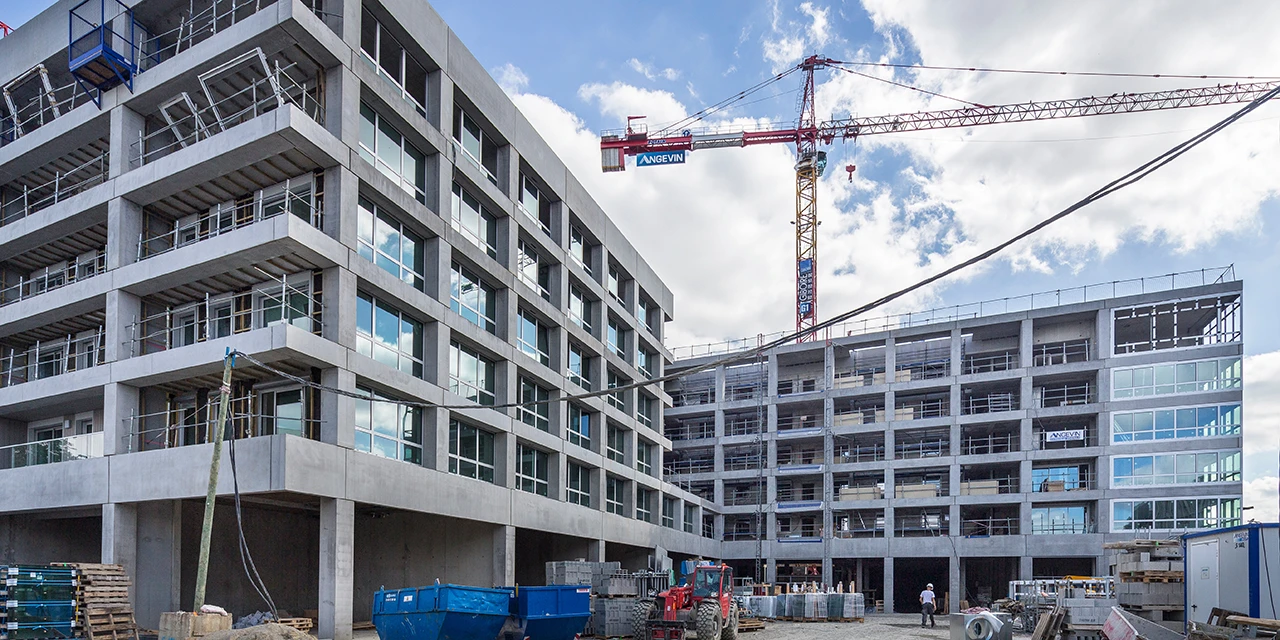
In Geneva you do not win a building site without papers. No federal licence is needed to start a construction company, but the labour-standards attestation opens or closes public tenders, a binding collective agreement applies from the first worker, and joint commissions inspect the sites. Add a largely cross-border workforce and subcontracting chains under joint wage liability, and you have the real rulebook of Geneva construction, laid out here step by step.
Contents
- The federal base: free access, collective rules
- Structural or finishing work: which agreement applies in Geneva
- Incorporating in Geneva, without bogus self-employment
- Bidding in Geneva: the attestation that opens tenders
- The cross-border workforce: permits, notifications, source tax
- Subcontracting and joint liability
- SUVA, pensions, liability: the cost of risk
- The pitfalls we see on Geneva sites
The federal base: free access, collective rules
Federal law imposes no diploma and no licence on masonry, renovation or general contracting. The regulated technical trades sit apart, electrical installation requires the federal ESTI licence, as covered in our guide to setting up an electrical company in Geneva, but structural work itself is free to enter.
The gap is filled by collective law. On 12 December 2025, the Swiss contractors’ association and the unions Unia and Syna concluded a new national agreement for the main construction sector, ratified in January 2026: a record six-year term, around 80,000 workers covered, minimum wages up 0.2 % in 2026, new rules on working and travel time, and the FAR scheme allowing retirement from age 60. On a Geneva site, these agreements bind everyone, and they are enforced.
Structural or finishing work: which agreement applies in Geneva
The first question for a Geneva founder is not the legal form; it is the applicable agreement. Structural work, masonry, reinforced concrete, civil engineering, falls under the national agreement with its zone-based wage classes and FAR contributions. Finishing trades, plastering and painting, carpentry, tiling, fall under the CCT-SOR, the binding collective agreement of the French-speaking finishing trades, with its own scale and its own joint commission.
Beneath the collective scales, Geneva’s statutory minimum wage, CHF 24.59 per hour in 2026, remains the absolute floor; for qualified building workers the collective minima sit well above it. Pricing an offer on the wrong scale, or below the agreement, means selling at a loss with a joint inspection waiting.
RISTER recommendation
Classify your activity before incorporating: structural work under the national agreement, finishing trades under the CCT-SOR, or both if your general contracting covers several trades. Joint-fund contributions, wage classes and inspections differ, and the company’s corporate purpose and fund affiliations are set against that classification.
Incorporating in Geneva, without bogus self-employment
The corporate steps are those of any Geneva incorporation, notary, commercial register, social funds, which our incorporation service handles end to end. A sole proprietorship suits a craftsman alone; the Sàrl at CHF 20,000 of capital becomes the norm once there is staff, guarantees to give and tenders to sign.
One warning is worth money here: self-employed status is recognised by the AVS social security fund, not declared. Several clients, genuine entrepreneurial risk, freedom of organisation: that is what the fund checks. The bogus self-employed worker serving a single principal is requalified as an employee at the first inspection, and the contributions are clawed back from the principal, with interest. Building on that model, or letting such workers onto your sites, stacks up an invisible social liability.
Formation and construction payroll
The company is formed with its agreement, its funds and its tender file
Applicable agreement, joint-fund and FAR affiliations, risk insurance, the attestations that open Geneva tenders: everything is set up at incorporation, not at the first inspection. RISTER® forms your building company and runs the canton’s most-inspected payroll.
Request a first exchange
A corporate services provider established in Geneva, 25 years of experience.
Bidding in Geneva: the attestation that opens tenders
A decisive share of Geneva demand, housing, schools, infrastructure, runs through public procurement, and access is documentary. To bid, the company produces its attestations: AVS and pension contributions paid, VAT and taxes current, accident insurance in force, and the undertaking to respect the profession’s labour standards, attested with the cantonal labour inspection authority. Without the complete file, the offer is set aside before its price is even read.
The sites themselves are watched: the joint commissions of the agreements inspect wages, classes and working time on the spot, and the coordinated undeclared-work checks verify permits, social security and source tax. For a compliant company these controls are protection against unfair competition; for the others they mean back payments, conventional penalties and exclusion from tenders.
The cross-border workforce: permits, notifications, source tax
Geneva construction runs on cross-border labour, and the employer carries the full administrative circuit: G permits obtained on the basis of the employment contract, hiring notifications, source tax withheld and settled by the employer, social affiliations from day one. Every cross-border hire is a small file of its own, and site inspections check it piece by piece.
If foreign firms or posted workers also intervene on your sites, the posted-workers notification regime applies on top, with its deadlines and Swiss wage rules; our secondment management service handles those duties. The border is a resource for the trade; it forgives no administrative approximation.
Subcontracting and joint liability
Subcontracting chains are the normal way Geneva building works, and the law has fenced them: in construction, the contracting company is jointly liable for its subcontractors’ failure to pay minimum wages, under article 5 of the Posted Workers Act. If a subcontractor underpays its crews, the claims climb to you.
The way out is diligence: collect wage-compliance attestations, verify documents, write the obligations into contracts, keep the proof. Applied to every subcontract, this documentary process is your shield; serious Geneva general contractors already impose it down their whole chain, and public project owners verify it.
SUVA, pensions, liability: the cost of risk
Construction is SUVA’s historic core: accident insurance is mandatory and its premiums, among the highest in the economy, belong in the business plan from day one, together with occupational pension contributions from the legal threshold. Business liability cover is not required by law, but no Geneva project owner or property manager hands over a site without it: damage to neighbouring buildings or utilities runs into hundreds of thousands of francs.
Performance guarantees and contractual retentions come on top, locking up cash for years in a sector where payment terms are already long. A site’s margin is read after the guarantees, not before.
The pitfalls we see on Geneva sites
The first pitfall is the offer priced below the agreement: the apparent margin turns into conventional penalties and back payments at the first joint inspection. The second is blind subcontracting, without documented diligence, which activates joint liability. The third is bogus self-employment, your own or a subcontractor’s, whose AVS requalification creates a retroactive liability at the principal.
Then come the incomplete tender file, one missing attestation eliminates the bid regardless of price, and cash flow eaten by retention guarantees. As with setting up a security company in Geneva, the lesson holds: in inspected trades, compliance is not a file you close, it is an organisation.
FAQ: starting a construction company in Geneva
Do I need a permit to start a construction company in Geneva?
No: neither federal nor Geneva law requires a licence for structural or renovation work. Regulated technical trades are the exception, electrical installation runs under the federal ESTI licence and plumbing-gas under utility concessions. The real barriers are the binding collective agreements, the attestations required to bid, and the site inspections.
Which collective agreement applies on a Geneva site?
Structural work falls under the national agreement for the main construction sector, whose 2026-2031 version was concluded on 12 December 2025, with the FAR early-retirement scheme from age 60. Finishing trades fall under the binding CCT-SOR of French-speaking Switzerland. Geneva’s statutory minimum wage, CHF 24.59 per hour in 2026, is the absolute floor, with collective minima above it for qualified workers.
What does Geneva require to bid on public tenders?
A complete, current file: AVS and pension contributions paid, VAT and taxes in order, accident insurance in force, and the labour-standards attestation registered with the cantonal labour inspection authority. One missing document sets the offer aside before its price is read; the file is maintained permanently, not the night before the deadline.
How do I employ cross-border workers in construction?
The employer carries the full circuit: G permit based on the employment contract, hiring notification, source tax withheld and settled, social affiliations from day one. For workers posted by foreign firms onto your sites, the posted-workers notification regime and Swiss wage rules apply on top. Site inspections verify each file piece by piece.
What is joint liability in Geneva construction?
Under article 5 of the Posted Workers Act, the contracting company answers for its subcontractors’ failure to pay minimum wages, down the whole chain. It exonerates itself by proving diligence: attestations collected, documents verified, obligations written into contracts. That process is the legal shield of every general contractor.
Can I work as a self-employed builder in Geneva?
Yes, if the AVS fund recognises the status: several clients, genuine entrepreneurial risk, free organisation. A bogus self-employed worker tied to one principal is requalified as an employee at the first inspection, with contributions clawed back from the principal. Once there is staff or tenders to sign, the Sàrl at CHF 20,000 of capital is the reference form.
Sources
- Swiss Contractors’ Association, National agreement for the main construction sector
- CCT-SOR, Collective agreement of the French-speaking finishing trades
- Posted Workers Act (SR 823.20), art. 5: joint liability
- FAR Foundation, Early retirement in the main construction sector
- Republic and canton of Geneva, Start a business in Geneva
- SUVA, Mandatory accident insurance
Conclusion
Starting a construction company in Geneva is simple; living from it means papers in order at every level: the right agreement from the first worker, the attestation that opens tenders, the diligence that neutralises joint liability, and a cross-border circuit run without approximation. Founders who build these rules into their prices from incorporation win sites; the others win inspections.
RISTER® is a corporate services provider established in Geneva for 25 years. We incorporate your company with its agreement, its funds and its tender file, then run the accounting and payroll of the canton’s most-inspected trade. For a first exchange, write to us.