
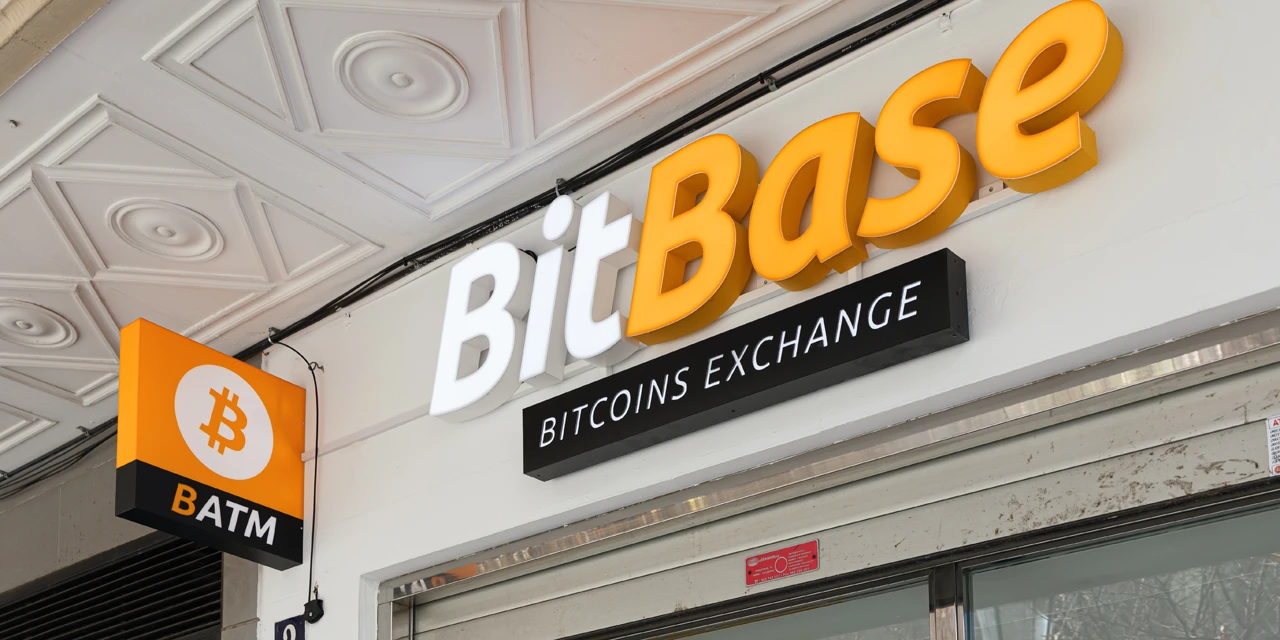
Founders arriving in Geneva with a crypto exchange, custody or payment project almost always open with the same question: how do we get the Swiss crypto licence? There isn’t one. Switzerland has never created a crypto licence, a crypto exchange licence or a VASP licence, and no authority issues such a document. What it has is a set of regimes attached to activities, and the entire project depends on which one your business falls into. Get that qualification right and the rest is engineering. Get it wrong, and you will have paid for an authorisation that does not cover what you actually do.
Contents
- The question to ask instead
- The grid: six activities, six regimes
- Most projects land on an SRO, not on FINMA
- The FinTech licence and its two blind spots
- If you are actually running a venue
- Custody of client crypto, and bankruptcy
- The obligations that start on day one
- Why Geneva, and what it takes to bank there
- FAQ
The question to ask instead
“Which licence do we need?” assumes a catalogue of licences to choose from. Swiss financial market law does not work that way. It describes activities, and each description carries its own supervisory consequence. So the question that actually moves a project forward is narrower and more uncomfortable: what exactly does the company do with assets that belong to someone else?
Does it hold them? Transfer them? Exchange them against fiat? Trade them in its own name for a client? Accept them as deposits? Match orders between third parties? Each of those verbs points somewhere different, and several of them can apply at once.
The English-language pages that rank on “crypto licence Switzerland” are mostly written by licensing firms based outside the country, and they sell a single process in numbered stages. One of the results on that search even carries the phrase “crypto license switzerland for sale”. A FINMA authorisation is granted to a named institution for a defined activity, and a change of control is reviewed. It is not a certificate that changes hands with a company.
The grid: six activities, six regimes
| What the company does | Regime | Who decides |
|---|---|---|
| Holds, transfers or exchanges client assets | Anti-Money Laundering Act | A self-regulatory organisation |
| Trades securities in its own name for clients | Securities firm, Financial Institutions Act | FINMA |
| Accepts deposits or designated crypto-assets up to CHF 100 million, without investing or remunerating them | FinTech licence, art. 1b Banking Act | FINMA |
| Takes in more, or invests or pays interest on the funds | Banking licence | FINMA |
| Runs a multilateral venue for DLT-based securities | DLT trading facility, art. 73a FMIA | FINMA |
| Takes in no more than CHF 1 million in total of deposits or payment crypto-assets held in a pool | Innovation space (art. 6 Banking Ordinance) | Nobody, but written notice is compulsory |
Sources: SR 952.0, SR 952.02, SR 954.1, SR 958.1, SR 955.0, consolidated versions in force. Only the German, French and Italian texts are authoritative.
Two things to notice in that table. The first row is not a FINMA authorisation at all, and it is where most projects land. And the regimes stack: a FinTech licence holder is also a financial intermediary under the anti-money laundering rules, so the obligations add up rather than replacing one another.
Most projects land on an SRO, not on FINMA
The Anti-Money Laundering Act captures anyone who, professionally, accepts, holds on deposit, or helps invest or transfer assets belonging to third parties. It then spells out cases, and two of them catch crypto businesses almost automatically: providing payment services, notably electronic transfers for third parties, and trading for own or third-party account in currencies, money market instruments, precious metals, commodities or securities and their derivatives. Holding or managing securities is covered too.
Being caught means affiliating with a self-regulatory organisation, which then supervises your due diligence. It does not mean applying to FINMA. Consultants who quote one price for “SRO or FINMA” have not made the distinction, and it is not a detail: the two routes differ in cost, duration, documentation and consequences.
Since 1 October 2026 the same act also reaches a third category, advisers, which is worth knowing because it changes the landscape around you: providers who supply a company with a registered address for more than six months are now inside its scope.
Your crypto company in Geneva
The entity comes first, the authorisation is filed by a company that already stands up
Incorporating the GmbH or AG, paying up capital including by contribution in kind in cryptocurrency, commercial register entry and UID, a registered office in Geneva with real follow-up of official notifications, VAT and accounting for digital asset flows, payroll: RISTER® builds and runs the Swiss structure alongside the regulatory counsel who files with FINMA or your self-regulatory organisation.
Request a meeting
RISTER – Fiduciary in Geneva, reply within one business day.
The FinTech licence and its two blind spots
Article 1b of the Banking Act, headed “promotion of innovation”, applies banking rules by analogy to firms principally active in the financial sector that accept public deposits up to CHF 100 million, or crypto-assets designated by the Federal Council, and that neither invest nor pay interest on them. Both limbs must hold. Start investing client assets and the regime falls away.
It also requires a precisely defined field of activity with a matching organisation, adequate risk management and effective internal controls covering compliance, adequate financial resources, and management that enjoys a good reputation and guarantees proper business conduct.
Two features are almost never mentioned by the firms selling this licence, and both are structural.
There is no deposit protection. The provisions on privileged deposits and immediate repayment do not apply to assets held under this regime, and clients must be told so before they deposit. That is a legal duty, not a disclosure preference, and it has to be built into onboarding.
Growth is on a clock. Cross CHF 100 million and you must notify FINMA within ten days and file a banking licence application within 90 days. The clock starts when the threshold is crossed, not at year end. A platform that scales quickly can find itself in a banking application it never planned.
If you are actually running a venue
A DLT trading facility is a commercially operated organisation for the multilateral trading of DLT-based securities, aimed at the simultaneous exchange of offers between several participants and the conclusion of contracts on non-discretionary rules, meeting at least one of three conditions: it admits the participants defined by the Financial Market Infrastructure Act, it provides central custody of DLT-based securities on common rules and procedures, or it clears and settles such transactions on common rules and procedures.
“At least one” is the phrase that catches people. Custody alone is enough. A project that offers safekeeping while deferring the trading engine to phase two may already be inside the definition on day one. Commercial operation is defined broadly as any independent economic activity pursued to obtain regular income, so there is no small-venue exemption.
Custody of client crypto, and bankruptcy
A Geneva platform that holds its clients’ crypto-assets has to be able to answer one question before any other: what happens to them if the company fails? Since 1 August 2021 the Debt Enforcement and Bankruptcy Act lets the client claim them back, where the company undertook to hold them ready at all times and they are assigned to the client individually, or to a pool in which the client’s share is clear (art. 242a para. 2 DEBA).
Most platforms run pooled wallets, and the law accepts that. What protects clients is not the storage technology but the books: a ledger that shows each client’s share on the date of bankruptcy. Without it, clients join the general creditors. If the claim is disputed, the deadline to bring an action at the place of bankruptcy is 20 days, and the client advances the cost of surrender (art. 242a paras 3 and 4 DEBA).
Holding client assets also has a regulatory consequence. Crypto-assets used as means of payment and held in collective custody come within the FinTech regime above CHF 1 million, except for unremunerated balances held only to settle client transactions at a securities firm or DLT trading facility, or at an asset manager or similar business where settlement occurs within 60 days (art. 5a para. 2 Banking Ordinance, French text).
The obligations that start on day one
Whatever the regime, one figure governs daily operations. A financial intermediary must verify the identity of the counterparty where a transaction in virtual currency, or several apparently linked transactions, reach or exceed CHF 1,000, outside a durable business relationship.
And where cash or other anonymous payment instruments are accepted for buying or selling virtual currencies, the intermediary must take technical measures to prevent that threshold being exceeded by linked transactions within 30 days. This is monitoring built into the product, not a policy in a binder, and it is a common gap in platforms designed abroad and brought to Switzerland.
Why Geneva, and what it takes to bank there
Zug gets the headlines on blockchain, and deservedly. Geneva offers something different and, for a number of projects, more useful: a financial centre where private banking, asset management and their auditors and lawyers have been dealing with custody, valuation and cross-border clients for generations. If your project sits closer to asset management than to protocol engineering, that proximity is worth more than a cluster label. Our guide on setting up as an asset manager in Geneva covers the neighbouring status, and choosing the canton deserves a deliberate answer rather than a default one.
On the company itself, the choice between the GmbH and the AG is set out in our comparison of the GmbH and the AG in Geneva, the sequence in our checklist to set up a company in Geneva, and the budget in what it costs to form a Swiss company. Capital can be paid up by contribution in kind, including in cryptocurrency, but it is a formal procedure: valuation, documentation and examination by the commercial register, with the valuation date and the custody arrangement being the points that draw questions.
The real obstacle is the bank account. Swiss banks apply enhanced due diligence to blockchain businesses, and the Swiss Bankers Association has issued guidance to its members on the subject. What works is a documented source of funds, a transparent ownership chain, a compliance framework that exists before the request rather than after it, and genuine Geneva substance. Plan that conversation in parallel with incorporation. VAT and accounting follow their own logic for digital asset flows: our guide to Swiss VAT sets the framework and Swiss taxation the rest.
FAQ: crypto companies in Geneva and Switzerland
Is there a crypto licence in Switzerland?
No. No federal act creates a crypto licence, a crypto exchange licence or a VASP licence. Depending on the activity, a crypto business affiliates with a self-regulatory organisation under the Anti-Money Laundering Act, or applies to FINMA for a FinTech licence, a securities firm licence, a banking licence or a DLT trading facility licence. Several regimes can apply at the same time.
What is the difference between SRO affiliation and FINMA authorisation?
An SRO affiliation is membership of a self-regulatory organisation that supervises anti-money laundering compliance; it is not an authorisation to carry on a regulated financial activity. A FINMA authorisation is granted by the regulator for a defined activity such as a FinTech licence or a securities firm licence. The two differ in cost, duration and consequences, and a project may need both.
Are client assets protected under the FinTech licence?
No. Privileged deposits and immediate repayment do not apply to assets held under article 1b of the Banking Act, and depositors must be informed of that restriction before depositing. The regime also requires that the assets be neither invested nor remunerated, failing which it no longer applies.
Does offering custody alone make us a DLT trading facility?
It can. The definition requires at least one of three conditions, and central custody of DLT-based securities on common rules and procedures is one of them. The conditions are alternatives, not a cumulative test, so a custody offering launched before the trading engine may already fall inside the regime.
At what amount must we identify a crypto client?
CHF 1,000, covering a single transaction or several that appear linked, outside a durable business relationship. Where cash or anonymous payment instruments are accepted, technical measures must prevent the threshold being exceeded by linked transactions within 30 days.
Can capital be paid up in cryptocurrency?
Yes, as a contribution in kind, subject to the usual formalities: valuation, documentation and examination by the commercial register. The valuation date, the custody arrangement and the liquidity of the asset are the points normally scrutinised, and the procedure should be prepared before incorporation rather than improvised at the notary.
Sources
- Banking Act (SR 952.0), art. 1b
- Anti-Money Laundering Act (SR 955.0), art. 2
- FINMA Anti-Money Laundering Ordinance (SR 955.033.0), art. 51a
- Financial Market Infrastructure Act (SR 958.1), art. 73a
- Debt Enforcement and Bankruptcy Act (DEBA, SR 281.1), art. 242a
- Banking Ordinance (SR 952.02), art. 5a and 6 (in French)
- FINMA, types of authorisation
Conclusion
There is no Swiss crypto licence to buy, and the projects that succeed here are the ones that accept that early. Describe precisely what the company does with client assets, place it in the right regime, and only then build: an SRO affiliation for most, a FinTech licence with its CHF 100 million ceiling and its absence of deposit protection for some, a DLT trading facility where custody alone can be decisive. Then hold the daily obligations, starting with the CHF 1,000 threshold and its 30-day monitoring. RISTER® incorporates and administers the Geneva company that carries the project, handles its accounts, its VAT and its registered office, and works with your regulatory counsel so that the file presented to FINMA or to your self-regulatory organisation rests on a company that already holds together.