
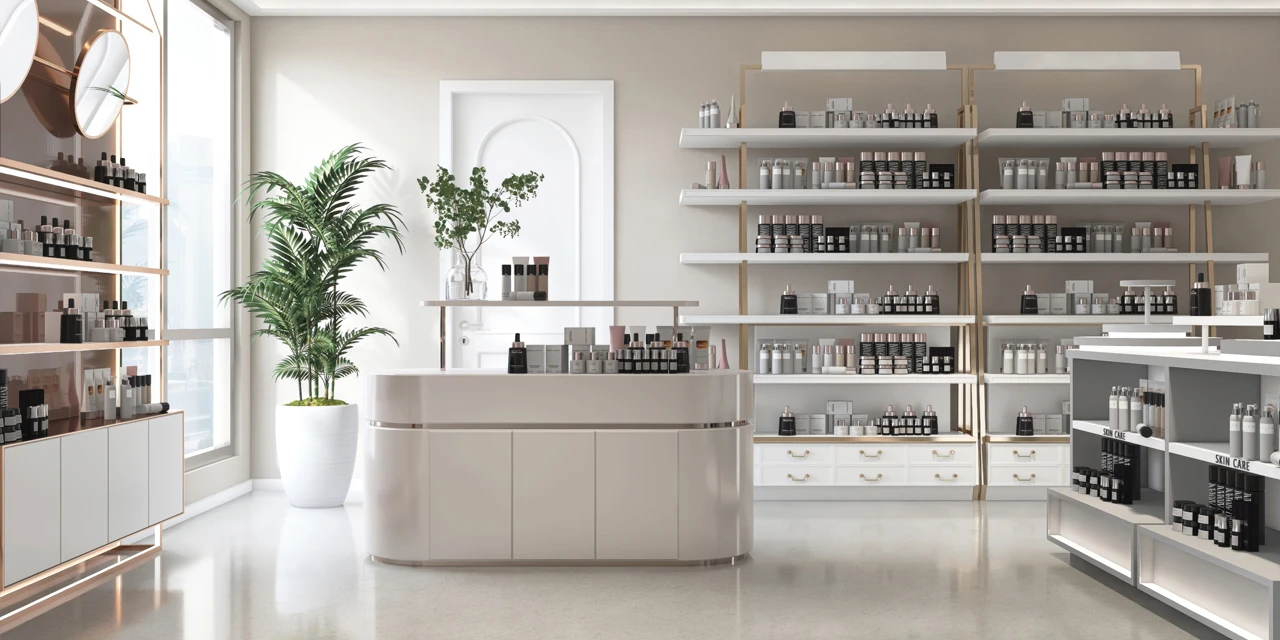
Starting a cosmetics brand in Geneva requires no permit: the SCAV, the cantonal service in charge of consumer goods, issues neither sales licences nor certificates of conformity, and no federal register lists creams or perfumes. Responsibility sits entirely with the brand. Once your name is on the label you are the manufacturer in law, even if a laboratory makes and fills your bottles, and you are the one the cantonal chemist will call. This guide follows a Geneva brand from formula to first bottle sold, and on to customers across the French border.
Contents
- Geneva, fragrance city, and what that does not change
- No licence and no certificate from the SCAV
- Your name on the label makes you the manufacturer
- The product file and the safety assessor
- Homemade products: where the exception ends
- Label, allergens and claims
- Perfume and alcohol
- Selling into France
- Swiss made and Geneva
- Setting up the company and protecting the brand
- Common pitfalls
- FAQ
Geneva, fragrance city, and what that does not change
Few cities hold as much perfumery know-how as Geneva. Givaudan moved to Geneva in 1898 and built a factory in Vernier; Firmenich was founded in 1895 and now operates as dsm-firmenich. According to the Federal Department of Foreign Affairs, companies in the region alone account for 30 per cent of the global flavours and fragrances market, and around 400 chemical companies are active in and around Geneva.
For a small brand this is a real advantage: laboratories, perfumers, raw material suppliers and packaging firms are close at hand. It changes nothing in the law. A brand launching three eaux de parfum from a studio in Plainpalais falls under the same ordinances as the industry’s largest houses, with the same file to keep and the same inspections to face.
No licence and no certificate from the SCAV
In Geneva the enforcement authority is the Service de la consommation et des affaires vétérinaires (SCAV). On its page on importing consumer goods, updated on 31 August 2026, it lists cosmetics among products that may be imported freely if they meet Swiss law, and states that it issues neither import authorisations nor certificates of conformity. The same applies to making and selling: there is no cantonal permit, no federal registration and no prior notification for cosmetics.
Inspections happen after products reach the market, through sampling, complaints or alerts. The SCAV may request the product file, take samples and require a withdrawal. As the Foodstuffs Act puts it, “official inspection does not imply an exemption from the obligation to carry out self-supervision” (Art. 26(2)); the absence of a visit is never an approval.
It follows that a label or website presenting a product as “approved” or “validated” by an authority breaks the rules: the Cosmetics Ordinance (OCos) prohibits claims suggesting that a competent authority has authorised or approved the product (Annex 6, point 1.1).
Your name on the label makes you the manufacturer
The legal definition surprises many founders. The manufacturer is the person who makes a cosmetic, or has it designed or made, and markets it under their own name or trade mark (Art. 2(1)(c) OCos). No vats and no filling line of your own? You are still the manufacturer, and you must ensure the product complies (Art. 3(1)).
Three situations come up among Geneva brands:
- Formula and production outsourced to a Swiss or foreign laboratory: the brand is the manufacturer, the laboratory provides compliant production.
- A foreign product resold under your brand: as distributor you take on the manufacturer’s obligations (Art. 3(3) OCos).
- A foreign product imported under its original brand: the importer is responsible, or an agent with a Swiss address appointed in writing by the manufacturer (Art. 3(1) and (2) OCos).
The Food and Utility Articles Ordinance also requires each establishment to appoint a responsible person with a business address in Switzerland (Art. 73(1)). In a two-partner brand this is usually one of the partners; otherwise responsibility falls on the management (Art. 73(2)).
Your cosmetics brand in Geneva
A company in good order before the first bottle is sold
Incorporation of the GmbH (Sàrl) or AG (SA) and entry in the Geneva commercial register, registered office and the Swiss business address of your responsible person, inventory and cost accounting, import VAT on ingredients and packaging, payroll: RISTER® sets up and runs your brand’s company so your energy goes into formulas and customers.
Request a meeting
RISTER – Fiduciary in Geneva, reply within one business day.
The product file and the safety assessor
Before the first sale, every product needs a product information file containing a safety report (Art. 57(1) Food and Utility Articles Ordinance). The Federal Food Safety and Veterinary Office (FSVO) repeats it on its cosmetics page, updated on 29 May 2026: the file is always mandatory.
The file brings together a product description, the safety report, the manufacturing method with a declaration of good manufacturing practice, proof of claimed effects where the product’s nature justifies it, and data on any animal testing (Art. 5(1) OCos). It may be written in French or English and is kept for ten years after the last batch is placed on the market (Art. 5(2)).
The safety report needs a qualified signature: a person with a degree in pharmacy, toxicology, medicine or a similar discipline (Art. 4(5) OCos). Geneva has no shortage of independent consultants and testing laboratories; what is often missing is a complete file to hand them. Ask your production laboratory for evidence of compliance with SN EN ISO 22716, the standard that triggers the presumption of good manufacturing practice under the OCos (Art. 12(3) and Annex 7).
Homemade products: where the exception ends
Many Geneva brands start in a kitchen or a small studio, with soaps, balms or massage candles. The law offers one narrow exception: the safety assessment and the product file are not required for artisanal cosmetics distributed locally in the limited setting of a bazaar, a school fair or a similar event, except for products for children under three or applied near the eyes or on mucous membranes (Art. 1(3) OCos).
Once the brand sells online, in shops, at regular markets or through resellers, the exception no longer applies. The other rules (product safety, labelling, claims) apply even at the bazaar. Moving from hobby to business is also moving to a full file.
Label, allergens and claims
A cosmetic sold in Geneva must be labelled in at least one Swiss official language (Art. 47(2)(c) Food and Utility Articles Ordinance) and show, among other things, the ingredients list headed “Ingredients”, the name and address of the responsible party, the date of minimum durability or period after opening, the batch number and the precautions for use (Art. 8 and 9 OCos). For perfume, the fragrance composition may appear as “parfum”, but substances that must be declared (allergens) are listed as well (Art. 8(1)(d) OCos).
| What labels often say | What the law says | Basis |
|---|---|---|
| “Approved by the authorities” | Prohibited: no authority approves cosmetics | OCos, Annex 6, point 1.1 |
| “Paraben-free” in large type | At risk: claims may not denigrate legally used ingredients | OCos, Annex 6, point 5.1 |
| “With hyaluronic acid” as headline | Allowed if an effective concentration is shown | OCos, Annex 6, point 3.6 |
| “Soothes irritation”, “heals” | Prohibited for a cosmetic: curative or soothing property | Art. 47(3) Food and Utility Articles Ordinance |
| “Not tested on animals” | Allowed only if neither you nor your suppliers ran or commissioned such tests | Art. 10(3) OCos |
| “Made in Geneva” | Allowed if true: misleading origin is prohibited | Art. 18 Foodstuffs Act, Art. 48c Trade Mark Protection Act |
Source: OCos (SR 817.023.31), Food and Utility Articles Ordinance (SR 817.02), Foodstuffs Act (SR 817.0), Trade Mark Protection Act (SR 232.11).
Effect claims (anti-wrinkle, 24-hour hydration) need proof in the file, and that proof must relate to the finished product using valid methods (Annex 6, point 3). A brand promoting an effect or a hero ingredient without a study should remove it from its label or website before the first inspection, not after.
Perfume and alcohol
Perfume is a cosmetic like any other: the law includes products intended to perfume the external parts of the body (Art. 53(1) Food and Utility Articles Ordinance). Its particular feature is alcohol. A perfume, being unfit for consumption, is not subject to alcohol tax (Art. 31(1) Alcohol Act). However, anyone who wants to use undenatured, untaxed alcohol to make products unfit for consumption must apply for a use authorisation from the Federal Office for Customs and Border Security (FOCBS) (Art. 32(1) Alcohol Act).
Take an independent perfumer in Geneva launching three eaux de parfum under her own name. She composes in her studio with pure ethanol and has the bottles filled by a subcontractor. She needs the FOCBS use authorisation for her ethanol, a file for each perfume with the allergen declaration, a signed safety assessment and a label naming her as manufacturer. Had she bought denatured alcohol, or a concentrate diluted by her supplier, the FOCBS authorisation would not have been required; everything else would.
One recent Swiss rule matters for perfumers: since 1 January 2026, leave-on cosmetics that may be exposed to sunlight must contain less than 1 mg/kg of furocoumarins (found in some citrus oils), but perfumes, eaux de toilette and eaux de Cologne are exempt (Art. 6(1) OCos). A scented body oil, on the other hand, is covered.
Selling into France
French customers are fifteen minutes away, but EU law sets a condition Switzerland does not: a cosmetic may only be placed on the EU market if a “responsible person” is designated within the Union (Art. 4(1) Regulation (EC) No 1223/2009). A Geneva company is not established in the EU, so the brand works through an importer in France, who becomes the responsible person, or appoints by written mandate an EU-established person who accepts in writing.
That responsible person notifies each product through the EU’s CPNP portal before it is placed on the market, giving among other things its name, category, the address where the file is available and the country of origin (Art. 13(1)). For the perfumer in our example, selling in Annecy therefore means finding a French or EU partner willing to take that role. The good news is that her Swiss file can serve as the basis, since the required content is the same on both sides, and her label can carry the address of that responsible person, which Switzerland also accepts (Art. 9(1)(b) OCos).
RISTER advice
Build your file and your label once, to EU standard, even if you start by selling only in Geneva. The day a shop in Annecy or Lyon calls, you will only need to appoint the responsible person and notify; rebuilding a file or reprinting boxes costs more than designing them properly from the start.
Swiss made and Geneva
A Geneva brand is tempted by the Swiss cross or the word “Geneva”. It may use them if at least 60 per cent of the product’s manufacturing costs are incurred in Switzerland (Art. 48c(1) Trade Mark Protection Act) and the activity giving the product its essential characteristics, including an essential manufacturing step, takes place there (Art. 48c(4)).
For perfume, the calculation has useful features. Natural products that cannot be produced in Switzerland, such as jasmine absolute or sandalwood, are left out, as are packaging, transport and marketing (Art. 48c(3)). Research and development, meaning the composition work done in Geneva, counts (Art. 48c(2)). A perfume composed and blended in Geneva from imported raw materials can therefore reach the threshold, whereas a cream made entirely abroad and merely packed in Switzerland cannot.
Setting up the company and protecting the brand
A GmbH (Sàrl) with CHF 20,000 of fully paid-in capital suits most brands at launch; an AG (SA), with CHF 100,000 of capital of which at least CHF 50,000 is paid in, makes sense when an investor joins or a distributor requires it. Our GmbH or AG comparison for Geneva and our checklist to set up a company in Geneva cover the steps.
Three further items come up in every file:
- The trade mark: at the IPI, the filing fee is CHF 450 for ten years and three classes, with a CHF 100 discount online; cosmetics and perfumery are class 3. Check prior rights before ordering boxes.
- Imports: since 1 January 2024 Switzerland has charged no customs duties on industrial products, cosmetics included, but 8.1 per cent import VAT remains due on imported ingredients, bottles and finished goods.
- Inventory: raw materials, bottles and finished products are valued at cost, which means knowing the real cost of each reference; that is also the basis of the Swiss made calculation.
A “beauty” supplement range or a product with a medical purpose falls under a different regime: see our guides on starting a supplement company in Geneva and a medical device company in Geneva.
Common pitfalls
- Waiting for SCAV approval: it does not exist; self-supervision is what counts.
- Moving from bazaar to online shop without a file: the artisanal exception ends there.
- Letting the laboratory “handle everything” when the law names the brand as manufacturer.
- Composing with pure ethanol without a FOCBS use authorisation.
- Hiding allergens behind the word “parfum” alone.
- Selling in Annecy without an EU responsible person or CPNP notification.
- Using “Geneva” or the Swiss cross without running the 60 per cent calculation.
FAQ: starting a cosmetics brand in Geneva
Does the SCAV issue a licence to sell cosmetics in Geneva?
No. The SCAV issues neither sales nor import licences nor certificates of conformity for cosmetics, and there is no federal registration. It checks products after they reach the market, by requesting the product file or taking samples. The brand must therefore hold its product information file and safety report before the first sale (Art. 57 Food and Utility Articles Ordinance).
Can you sell homemade cosmetics in Geneva?
Yes, but the relief is narrow. Only artisanal cosmetics distributed locally in the limited setting of a bazaar, a school fair or a similar event are exempt from the safety assessment and the file, and not if they are intended for children under three or applied near the eyes (Art. 1(3) OCos). Selling online or in shops requires the full file.
Who is the manufacturer when a lab makes your brand?
You are. Article 2(1)(c) OCos treats as manufacturer the person who has a cosmetic designed or made and markets it under their own name or trade mark. The laboratory provides production and good manufacturing practice (ISO 22716); the brand answers for compliance, keeps the file for ten years and appoints a responsible person with a Swiss business address.
Do you need a permit to use alcohol in perfume?
Yes, if you work with undenatured, untaxed alcohol: Article 32(1) of the Alcohol Act then requires a use authorisation from the FOCBS. The finished perfume, unfit for consumption, is not subject to alcohol tax (Art. 31(1)). A brand buying denatured alcohol or a pre-diluted concentrate does not need this authorisation.
What is needed to sell your brand in France?
An EU-established responsible person, required by Article 4 of Regulation (EC) No 1223/2009: either a French importer, or a person you appoint by written mandate who accepts in writing. That person notifies each product through the CPNP portal before it is placed on the market (Art. 13). Your Swiss file can serve as the basis, since its content matches EU requirements.
Which legal form suits a cosmetics brand in Geneva?
A GmbH (Sàrl) with CHF 20,000 of fully paid-in capital suits most brands at launch. An AG (SA), with CHF 100,000 of capital of which at least CHF 50,000 is paid in, makes sense when an investor joins or a major distributor asks for it. Either way, the company must appoint a responsible person with a business address in Switzerland.
Sources
- SCAV Geneva, importing consumer goods (31 August 2026)
- FDHA Ordinance on Cosmetics (OCos), SR 817.023.31
- Food and Utility Articles Ordinance, SR 817.02
- Foodstuffs Act, SR 817.0
- FSVO, cosmetic products (29 May 2026)
- Alcohol Act, SR 680
- Regulation (EC) No 1223/2009 on cosmetic products
- Trade Mark Protection Act, SR 232.11
- FDFA, How Geneva became the Silicon Valley of fragrances and flavours (15 November 2025)
- FOCBS, abolition of industrial tariffs on 1 January 2024
- IPI, trade mark costs
Conclusion
In Geneva, a cosmetics or perfume brand is born without a permit, in a city where expertise is everywhere. What makes it last is what nobody asks for at the start: a complete file for each product, a safety assessment signed by the right person, a truthful label, a FOCBS authorisation if the studio works with pure ethanol, and an EU responsible person the day France comes calling. RISTER supports Geneva brand founders with incorporation, then inventory accounting, VAT and payroll, under a management team with 25 years of experience serving Geneva businesses.