
RISTER News & Insights

VAT in Switzerland: A Complete Guide to Rates and How It Works for Businesses
VAT in Switzerland is a general consumption tax paid by the final consumer. It is levied at every stage of the production and distribution of goods and services within Switzerland. The VAT due on transactions is calculated on the invoiced or paid amount for goods and services. Businesses subject to Swiss VAT may recover input VAT incurred on purchases by deducting it from VAT collected before filing their return with the Federal Tax Administration.
VAT in Switzerland: A Complete Guide to Rates and How It Works for Businesses
VAT in Switzerland is a general consumption tax paid by the final consumer. It is levied at every stage of the production and distribution of goods and services within Switzerland. The VAT due on transactions is calculated on the invoiced or paid amount for goods and services. Businesses subject to Swiss VAT may recover input VAT incurred on purchases by deducting it from VAT collected before filing their return with the Federal Tax Administration.
FIDUCIAIRE|SUISSE: a leading reference in Swiss fiduciary services
RISTER is a recognized fiduciary firm, a member of FIDUCIAIRE|SUISSE (Geneva Section), ensuring high-quality services. It supports businesses and individuals in accounting, taxation, payroll management, and company creation. Its membership in FIDUCIAIRE|SUISSE attests to its expertise, reliability, and commitment to industry standards. RISTER benefits from a network of strategic partners and continuous training for its employees, positioning itself as a key player in fiduciary services in Switzerland.

The corporate seal and stamp in Switzerland
In Switzerland, the use of a corporate seal or stamp is not mandatory and has no legal value. However, it is commonly used on invoices, quotes, and official correspondence to enhance professionalism. Some countries require a seal to validate commercial documents, which can be useful for Swiss companies operating internationally. There are various types of stamps, including ink stamps, embossed seals, and digital stamps. With digitalization, certified electronic signatures have become a more efficient and legally recognized alternative.
Legalization and apostille of business documents in Geneva
RISTER Fiduciary in Geneva assists businesses in the legalization and apostille of their documents, ensuring their international recognition. We handle all the necessary procedures, including signature certification, certified true copies, validation by cantonal authorities, and obtaining apostilles for countries that are members of the Hague Convention. Our expertise guarantees a fast, secure, and legally compliant service. RISTER thus facilitates international business and administrative transactions by ensuring the validity of corporate documents.
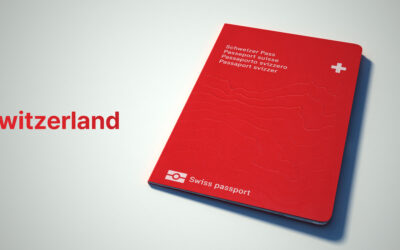
Swiss Passport: Features, Application Process, Costs and Naturalisation
The Swiss passport is an identity and travel document issued to Swiss citizens, offering visa-free access to many countries. It is distinguished by its red cover with the white cross. Swiss naturalization can be obtained through descent, marriage, or prolonged residence under certain strict conditions, including linguistic and social integration. The passport is biometric and valid for 10 years (5 years for minors). It also allows citizens to benefit from Swiss consular services abroad.

The Swiss Tax System: An Overview of Taxation in Switzerland
Taxation in Switzerland is based on three levels: federal, cantonal, and communal, resulting in variations depending on the location. Individuals are taxed on income (up to 45%) and wealth (0.3% to 1%). Companies are subject to a fixed federal tax of 8.5% on profits, in addition to cantonal and communal taxes, with overall rates ranging between 11.8% and 21%. Switzerland applies double economic taxation, taxing corporate profits and then dividends received by shareholders. Each canton offers specific tax conditions, making tax planning essential for individuals and businesses.
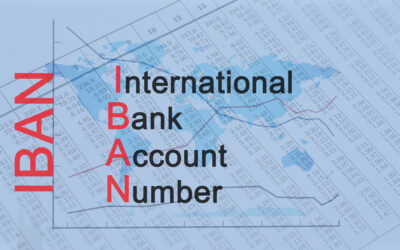
Swiss CHF IBAN: Structure, Verification and Usage
The IBAN in CHF is a unique banking identifier consisting of 21 characters, structured into several parts: country code (CH), check digits, bank code, and account number. It is mandatory for domestic and international payments in Switzerland, often used alongside the BIC/SWIFT code for cross-border transfers. Compatible with multi-currency accounts, it can handle transactions in CHF and other currencies. ISO 13616 and ISO 20022 standards ensure its standardization, and its validation relies on the Modulo 97 algorithm. The IBAN simplifies payments while ensuring security and accuracy.

The Swiss Made Label: A mark of excellence and an asset for entrepreneurs
The Swiss Made label guarantees the quality, craftsmanship, and Swiss origin of products, particularly in watchmaking, food, and industrial goods. It is based on strict criteria, such as a significant portion of manufacturing and components being Swiss-made. Synonymous with prestige and reliability, it provides a major competitive advantage for businesses. In addition to attracting talent, it allows for significant economic value enhancement of products. This label is a powerful tool for entrepreneurs aiming to benefit from Switzerland’s image of excellence.

The corporate name of a company in Switzerland
The corporate name of a company in Switzerland is its official name under which it is registered and conducts business activities. It plays a crucial role in the legal identification of the company and must comply with strict regulations established by the Swiss Code of Obligations.

Public Holidays in Switzerland in 2025, 2026 & 2027
In Switzerland, public holidays reflect the cultural and religious diversity of each canton. While some holidays, such as New Year’s Day, Ascension Day, Swiss National Day, and Christmas, are observed nationwide, others, like Geneva’s Fast or Assumption Day, are specific to certain regions. This variability has a direct impact on activity planning and business management.

Secondment Procedure in Switzerland: Key Guide for International Companies
The secondment procedure in Switzerland is an essential process for international companies temporarily sending employees to Switzerland on professional assignments. This mechanism allows employees to remain under contract with their original employer while working in Switzerland on a time-limited mission.

What is the difference between a manager and a director of a Sàrl/GmbH in Switzerland?
The manager of a Sàrl/GmbH in Switzerland is the legal representative with overall management responsibility and authority over significant decisions. The term “director” is informal, typically referring to a senior executive responsible for a specific department without strategic decision-making power. The key difference lies in their level of responsibility and decision-making authority, with the manager being the primary decision-maker for the company.

RISTER – Fiduciary in Geneva: Payroll management and work permits in Switzerland
If you’re based in Geneva and are looking for a reliable and efficient solution for your company’s payroll management, our fiduciary services in payroll management are just what you need. Discover how RISTER – Fiduciary in Geneva can simplify this complex task and allow you to concentrate on developing your business.
Contact us
We look forward to hearing from you
Address
Rue Adrien-Lachenal 26
1207 Geneva
Suisse