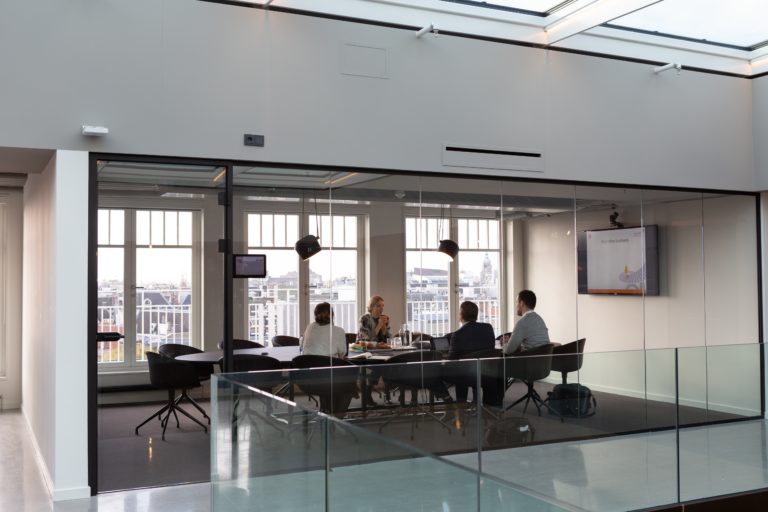

In the context of a Swiss LLC (Sàrl/GmbH), two important positions are involved: the manager and the director. Although these terms may seem similar at first glance, they have distinct responsibilities and functions within the company. In this text, we will examine the fundamental differences between a manager of a Sàrl and a director, as well as their respective roles.
Director, manager, executive director in brief
- Director: member of the board of directors of a public limited company (SA/AG), corporate body (Art. 707 et seq. CO).
- Manager: member of the management of a limited liability company (Sàrl/GmbH), corporate body (Art. 809 et seq. CO).
- Executive director: executive appointed by the body, in charge of operational management, generally without corporate-body status or strategic power.
- Common point: both an SA/AG and a Sàrl/GmbH must have at least one representative domiciled in Switzerland (Art. 718 para. 4 / 814 para. 3 CO).
Director, manager, executive director: the comparison table
Before going into the detail of the manager and the director, here is an overview of the three functions, which depend first of all on the legal form of the company.
| Criterion | Director | Manager | Executive director |
|---|---|---|---|
| Legal form | Public limited company (SA/AG) | Sàrl/GmbH | SA/AG or Sàrl/GmbH |
| Legal basis | Art. 707 et seq. CO | Art. 809 et seq. CO | Delegation (Art. 716b / 811 CO) |
| Status | Corporate body | Corporate body | Executive, not a corporate body |
| Decision power | Strategic and representation | Strategic and representation | Operational, by delegation |
| Liability | Personal in case of fault | Personal in case of fault | Limited to the function (employee) |
Director, manager and executive director under Swiss company law.
For the detailed role and responsibilities of the resident body, see our guide on the role of the director, manager and resident director of a Swiss company.
The Sàrl/GmbH and its organisational structure
A Sàrl/GmbH is a widely-used legal form of the company in many countries, combining the advantages of limited liability for shareholders while offering some flexibility in its management. A Sàrl/GmbH is led by one or several managers, who can be shareholders or external parties.
The role of the manager in a Sàrl/GmbH
The manager of a Sàrl/GmbH is the legal representative of the company, responsible for the day-to-day management of business operations and making important decisions. The manager’s tasks may include financial management, staff supervision, contract negotiation, and representing the Sàrl/GmbH to third parties. The manager also bears the responsibility of ensuring that the company complies with laws and regulations.
The characteristics of the director in a Sàrl/GmbH
In contrast, the title of “director” does not have a specific legal status in a Sàrl/GmbH. Instead, it is often informally used to designate a senior executive or head of a specific department within the company. The director may be appointed by the managers to supervise a team or a particular division. While the director may have specific operational responsibilities, they generally lack the power to make strategic decisions on behalf of the Sàrl/GmbH.
Responsibilities and decision-making power
The main difference between a manager and a director lies in their level of responsibility and decision-making authority. The manager is the primary decision-maker for the Sàrl/GmbH, while the director typically acts as a first-level manager under the authority of the manager. The director’s role is more focused on specific operational tasks, while the manager has a broader vision of the company and makes strategic decisions.
Managers of a Sàrl/GmbH generally bear more risks and obligations than directors. As the legal representative of the company, the manager is responsible for making strategic decisions, managing the day-to-day operations of the company, and can be personally and financially liable in case of bankruptcy or debts of the Sàrl/GmbH. The manager also has the obligation to comply with laws and regulations.
On the other hand, the director usually holds a salaried position, works under the authority of the manager, and does not have the same level of financial engagement. Their obligations are often more specific and operational, focused on managing a department or a particular team, without carrying the overall responsibility of the company.
In conclusion, while the terms “manager” and “director” may be used in the context of a Sàrl/GmbH, they refer to different roles with distinct responsibilities. The manager is the primary decision-maker, responsible for the overall management of the company, while the director typically serves in a specialized function under the authority of the manager. Understanding these differences is essential for effective and harmonious management within the company.
FAQ: manager, director and administrator in Switzerland
What is the difference between a manager and a director in a Sàrl/GmbH?
The manager is the governing body of a Sàrl/GmbH: as legal representative, they make strategic decisions and bind the company (Art. 809 et seq. CO). The director is an executive, generally salaried, in charge of operational management under the manager’s authority, without corporate-body status or strategic power.
What is the difference between a director (administrator) and a manager?
The director (administrator) runs a public limited company (SA/AG) as a member of the board of directors (Art. 707 et seq. CO); the manager runs a Sàrl/GmbH (Art. 809 et seq. CO). Both are corporate bodies with the power of representation and signature. The difference lies in the legal form of the company, not in the level of liability.
Is the executive director of a Swiss company a corporate body?
No, as a rule. The executive director performs an executive function by delegation from the body (Art. 716b CO for the SA/AG, Art. 811 CO for the Sàrl/GmbH). They may hold signing authority recorded in the commercial register, but they do not have the status of a superior body nor the strategic power of the director or manager.
Is a director higher than a manager?
It depends on the legal form of the company — in Swiss law the question is not one of hierarchy levels but of who is a corporate body (organe). In a Sàrl/GmbH, the manager is the top governing body: an “executive director” appointed below them ranks lower. In an SA/AG, the board of directors holds the highest authority, above the executives it appoints. So the person with the higher legal standing is the corporate body (manager or director), not the delegated executive.
Is a CEO a director or a manager in Switzerland?
In Switzerland, a CEO (chief executive officer, or directeur général) is usually an executive director: they run day-to-day operations by delegation of the board or the management (Art. 716b CO for an SA/AG, Art. 811 CO for a Sàrl/GmbH). The CEO is only a corporate body if they also sit on the board of directors (SA/AG) or the management (Sàrl/GmbH). The title itself is an operational function, distinct from the statutory bodies that legally bind the company.
Sources
- Swiss Code of Obligations (CO) — SR 220, Art. 707 et seq. (board of directors, SA/AG), Art. 809 et seq. (management, Sàrl/GmbH)
- Swiss Code of Obligations (CO) — SR 220, Art. 716b and 811 (delegation of management), Art. 718 para. 4 / 814 para. 3 (resident representation)
For more information or to initiate your initial consultation, please contact us. We would be delighted to get to know you and define the next steps for appointing the manager or director for your company in Switzerland. Fill out our contact form or call us at +41 (0)22 566 82 45.