
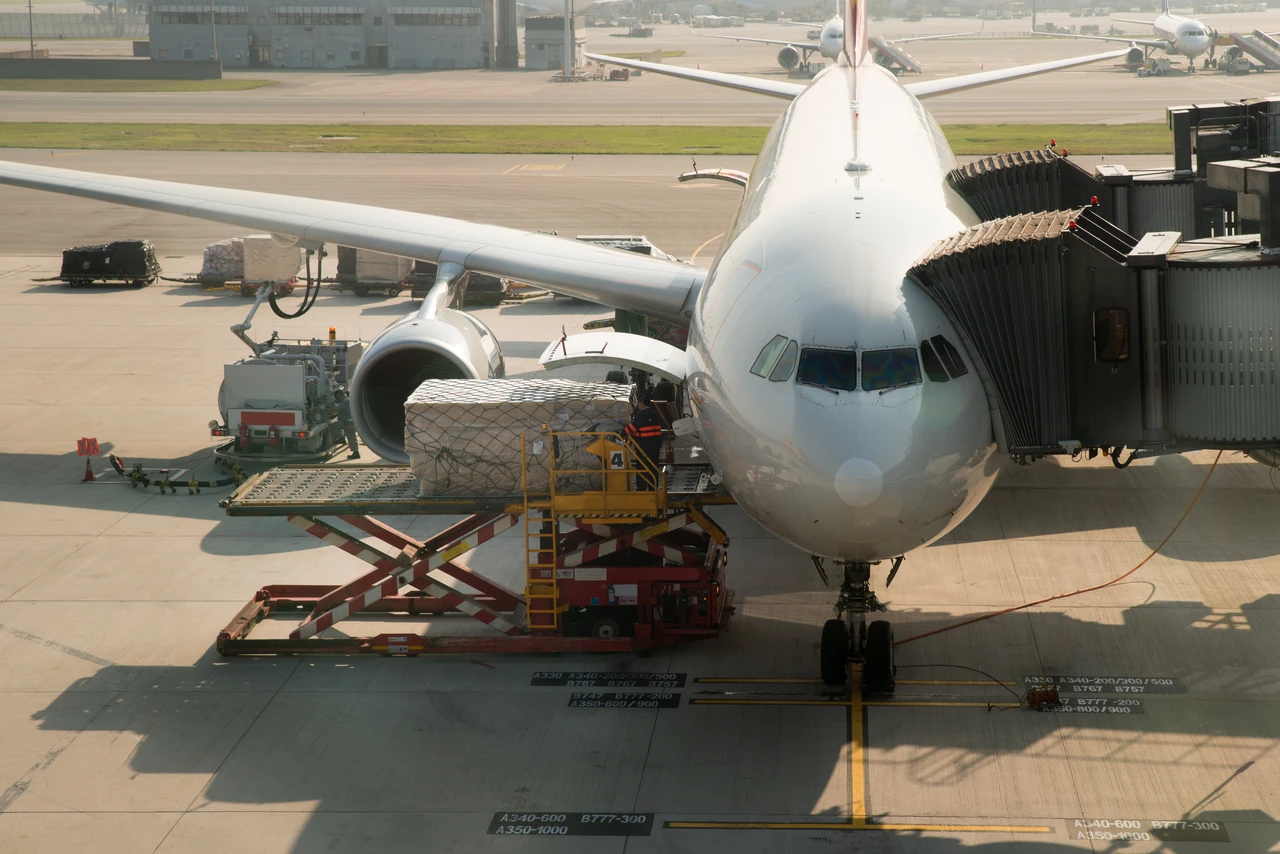
To work as a freight forwarder in Geneva you need no licence and no federal exam. Anyone filing customs declarations for clients must be fit for the job, and the Federal Office for Customs and Border Security (FOCBS) steps in afterwards if they are not. The commitments arrive with the first files. Each declaration the customs office accepts makes your company jointly liable for the importer’s duties and import VAT, and each air consignment falls under the Montreal Convention, which limits what the airline owes to 26 special drawing rights per kilo.
Contents
- A freight forwarder in Geneva starts without a permit
- The forwarding agent under Article 439 CO
- Air cargo and the Montreal Convention
- Setting up the AG or GmbH in Geneva
- Becoming a freight forwarder in Geneva from the UK or elsewhere outside the EU
- Acting as customs declarant makes your company a debtor
- Customs transit, guarantees and customs warehouses
- Subcontracting road haulage without an FOT licence
- VAT on a Geneva forwarder’s invoices
- Where first-year forwarders slip
- FAQ
A freight forwarder in Geneva starts without a permit
Federal law requires no authorisation to organise shipments or to clear goods for other people. Whoever files customs declarations on a commercial basis must simply have the required aptitude (Art. 109(1) of the Customs Act, CustA, LD in French).
Article 233 of the Customs Ordinance (OD) lists what that means: being at least 18, not being legally incapacitated, having the necessary knowledge and offering a guarantee of correct professional representation in customs proceedings. Nobody checks this beforehand; a declarant who falls short or breaks customs law can be barred by the FOCBS, for a fixed period or indefinitely (Art. 109(2) CustA). The federal diploma known by its German title “Zolldeklarant*in mit eidg. Fachausweis”, prepared through SPEDLOGSWISS, helps with hiring but is not a condition of practice.
Access to Passar, the FOCBS goods traffic system, is another matter: the DaziT minutes of 22 June 2026 require an ePortal registration with an ID PC and business partner roles.
The forwarding agent under Article 439 CO
The Code of Obligations describes the forwarding agent as one who “in return for payment undertakes to carry or forward goods for the consignor’s account but in his own name” (Art. 439 CO). Such a person is regarded as a commission agent, yet the rules on contracts of carriage govern the forwarding of the goods.
An import-export company buys goods and sells them on. A forwarder works on someone else’s cargo for a commission, must notify the client “immediately” once the job is done (Art. 426(1) CO), recovers advances and expenses with interest (Art. 431(1) CO) and holds a special lien over the goods until paid (Art. 434 CO).
On the transport leg, a carrier owes the full value of goods lost or destroyed unless it proves one of the defences in Article 447 CO, and it “is liable for all accidents and errors occurring during the carriage of goods”, even when it handed the job to another carrier (Art. 449 CO). Since the law applies these carrier rules to the forwarder, the general conditions you contract on carry real weight.
The SPEDLOGSWISS general conditions
Since 1 July 2005 the Swiss freight forwarding association has applied general conditions to its members’ orders, unless agreed otherwise (Art. 1); only the German text is authoritative. Under them the forwarder becomes a carrier when it moves goods with its own means or issues its own transport document with a commitment to deliver (Art. 2). As an intermediary, it answers for subcontractors only for the care taken in choosing and instructing them (Art. 21), within 8.33 SDR per kilo of gross weight and 20,000 SDR per claim (Art. 22). On a few kilos of watches that is very little, and transport insurance is taken out only on the client’s express written request (Art. 13).
Air cargo and the Montreal Convention
An airline’s liability for destruction, loss, damage or delay of cargo has been limited to 26 special drawing rights (SDR) per kilogram since 28 December 2024. The cap falls away only if the consignor made a special declaration of interest in delivery when handing over the package (Art. 22(3) of the Montreal Convention). The carrier is liable simply because the damage occurred during carriage by air (Art. 18(1)), but the deadlines are short.
| Event | Time limit | Provision |
|---|---|---|
| Damage to an air consignment | Written complaint within 14 days of receipt | Montreal, Art. 31(2) and (3) |
| Delay by air | Complaint within 21 days of the goods being placed at the consignee’s disposal | Montreal, Art. 31(2) |
| Lawsuit against the airline | 2 years, after which the right is extinguished | Montreal, Art. 35(1) |
| International road leg | 1 year, or 3 years for wilful misconduct | CMR, Art. 32(1) |
Sources: Montreal Convention (SR 0.748.411, version of 7 April 2026) and CMR (SR 0.741.611), French texts published on Fedlex.
Without a timely complaint, no action lies against the carrier unless it acted fraudulently (Art. 31(4)). By road, the CMR caps compensation at 8.33 SDR per kilo of gross weight short (Art. 23(3)).
Setting up the AG or GmbH in Geneva
No legal form is imposed, but a company with share capital keeps the partners’ own assets away from a customs debt that may dwarf the commission earned on the file: the GmbH “is liable for its obligations to the extent of the company assets only” (Art. 794 CO), and Article 620(1) CO says the same of the AG.
An AG needs CHF 100,000 of share capital, at least CHF 50,000 of which is paid in on incorporation (Art. 621(1) and 632 CO). A GmbH (Sàrl in French) needs CHF 20,000, with every contribution paid in full on formation (Art. 773(1) and 777c(1) CO). Registration in the Geneva commercial register follows the route set out on our page about incorporating a company in Switzerland. That entry comes back later, since AEO applicants must be registered (Art. 112b OD).
Becoming a freight forwarder in Geneva from the UK or elsewhere outside the EU
Article 233 OD sets no nationality condition for declarants, so the work lies in the residence file. A British founder now goes through the same admission as any other non-EU national: Article 19 of the Foreign Nationals and Integration Act (FNIA, LEI in French) allows self-employment if, among other conditions, it serves the interests of the economy as a whole and “they have an adequate and independent source of income”. EU nationals take a shorter route, with a residence permit of at least five years once they show they are established as self-employed (ALCP, Annex I, Art. 12).
Until you move, the AG must be representable by a board member or executive officer resident in Switzerland (Art. 718(4) CO), and the GmbH by a managing director or manager (Art. 814(3) CO). The residence tests of customs law look at the company itself, so a registered office in Geneva is enough to apply for an open customs warehouse (Art. 54 CustA) and, in time, for AEO status (Art. 42a CustA).
Your forwarding company in Geneva
Articles, books and VAT for a forwarding business
Incorporation of the AG or GmbH and entry in the Geneva commercial register, a director resident in Switzerland while you relocate, bookkeeping that keeps client advances, duties paid on account and commissions apart, and VAT on your import, export and warehousing services: RISTER® sets up and administers your forwarding company.
Request a meeting
RISTER – Corporate Service Provider in Geneva, reply within one business day.
Acting as customs declarant makes your company a debtor
The customs debt arises when the customs office accepts the declaration (Art. 69(a) CustA). From then on your company counts among the debtors, as agent of the person required to declare (Art. 70(2)(b) CustA), and all debtors are jointly and severally liable (Art. 70(3)). The FOCBS may claim from you and leave you to recover from the client.
Import VAT follows (Art. 51(1) VAT Act), with different exits. For duties, joint liability ends when the importer pays through its own FOCBS centralised settlement procedure account (CSP, PCD in French), under Article 70(4)(a) CustA. For VAT the bar is higher. Article 51(2) of the VAT Act releases the commercial declarant only if the importer “is entitled to make an input tax deduction”, “has the import tax debt charged via the FOCBS’s centralised settlement procedure (CSP) account” and “has commissioned the person who files customs declarations commercially to act as their direct agent”. One condition missing, and you remain a co-debtor.
Negligence is enough for a penalty: an inaccurate declaration can lead to a fine of up to five times the duty evaded (Art. 118(1) CustA). How the import tax is calculated is covered in our guide to importing into Switzerland.
RISTER advice
Keep a file per importer with its CSP account number, its right to deduct input tax and the signed direct-agency mandate. With an occasional client who has no CSP account, the debt stays with you: take an advance on the duties before filing.
Customs transit, guarantees and customs warehouses
Foreign goods that land in Geneva and are cleared elsewhere in Switzerland move under the transit procedure (Art. 49(1) CustA). Whoever lodges the declaration becomes holder of the procedure under the Common Transit Convention (Appendix I, Art. 2). The holder presents the goods intact at destination and lodges a guarantee (Art. 8). Since mid-2024 these operations have run through Passar under NCTS phase 5, according to FOCBS regulation R-14-01.
Air freight has a waiver: no guarantee is needed for simplified transit on an electronic transport document (ETD), which the airline manages. R-14-01 carves out substitute traffic, meaning air freight carried by road instead of by plane. That truck needs an individual or comprehensive surety, or vouchers of EUR 10,000 each; cash deposits are refused for transits opened in Switzerland until further notice. Cutting a comprehensive guarantee to 50%, 30% or 0% of the reference amount (Appendix I, Art. 75) requires, among other things, three years of financial obligations met.
Open customs warehouse and AEO status
Storing uncleared foreign goods near the airport requires FOCBS authorisation for an open customs warehouse, granted to an applicant domiciled in Switzerland that guarantees proper operation (Art. 54 CustA). Storage time is unlimited (Art. 53(3) CustA), the keeper answers for supervision and charges (Art. 53(5)), and supplies of goods held under customs control in a warehousing procedure are exempt from VAT (Art. 23(2)(3) VAT Act). A bonded warehouse also needs authorisation, and must in principle be open to everyone on the same terms (Art. 64(2)(c) CustA).
Authorised economic operator status rewards a clean record: the FOCBS checks the three years before the application for serious or repeated offences and for sound finances (Art. 112d and 112f OD). Once granted, the security falls to no more than 10% of the duties, international transit aside (Art. 194 OD).
Subcontracting road haulage without an FOT licence
While third-party hauliers do the driving, your company needs no licence from the Federal Office of Transport (FOT, OFT in French). The licence covers businesses that carry goods themselves for payment in vehicles above 2.5 tonnes; the exemption up to 3.5 tonnes applies only to journeys entirely inside Switzerland (Art. 3 LEnTR, the federal act on road transport companies). A plan for your own fleet belongs in our guide on setting up a road transport company and the FOT licence.
Since 1 May 2025, Article 8a LEnTR forbids a business to instruct a road haulier when carrying out the job would breach the licence requirement or the cabotage rules. Negligence is punishable by a fine (Art. 11(3bis)). The public part of the FOT register shows each haulier’s licence type (Art. 9(2)).
VAT on a Geneva forwarder’s invoices
The VAT Act exempts transport linked to imports and exports, along with logistics work on goods under customs control (Art. 23(2)(5) to (7)). Registration becomes compulsory at CHF 100,000 of annual turnover generated “on Swiss territory and abroad” (Art. 10(2)(a)).
| Service invoiced | VAT treatment | VAT Act |
|---|---|---|
| Import freight as far as the destination in Switzerland | Exempt; included in the base of the import VAT collected at the border | Art. 23(2)(5); Art. 54(3)(b) |
| Forwarding goods released for free circulation to an export destination | Exempt | Art. 23(2)(6) |
| Clearance or storage of goods under customs control | Exempt | Art. 23(2)(7)(b) |
| Domestic transport with no link to an import or export | Taxable at 8.1% | Art. 25(1) |
Source: VAT Act, SR 641.20, version of 31 March 2025.
A worked case: an air freight AG at Geneva Airport
Two former air cargo agents found a Geneva AG with CHF 100,000 of share capital, half paid in; the one living in Geneva sits on the board with signing authority. Their first client is a watchmaker that ships finished watches to Asia and brings in components.
The first problem arrives on an inbound flight: a 4-kilo carton of components is delivered crushed. The AG drafts the written complaint on the watchmaker’s behalf and sends it to the airline on day eight, well inside the fourteen days, so the claim stands. It pays 104 SDR and nothing more, because no special declaration of interest had been made. Every shipping order now offers a declared value or cargo insurance in writing.
The customs gap took longer to show: the first imports went through without a direct-agency mandate, keeping the AG jointly liable for import VAT. The watchmaker was VAT-registered with a CSP account; its signature on the mandate closed the gap. The AG is now drafting its application for an open customs warehouse. AEO status will wait three financial years.
Where first-year forwarders slip
The hardest error to undo is a missed deadline. Fourteen days after a damaged air consignment is received, with no written complaint sent, the claim against the airline is gone.
The rest come from unwritten commitments. Telling a client the cargo is insured when no written order exists. Declaring for a one-off importer that has no CSP account and has paid nothing up front. Assuming a truck loaded with air freight enjoys the ETD guarantee waiver. Giving a road leg to a haulier whose licence was never checked.
FAQ: becoming a freight forwarder in Geneva
Do you need a licence to work as a freight forwarder in Switzerland?
No. The law requires aptitude (Art. 109 CustA and 233 OD), and the FOCBS can bar a declarant who lacks it. The FOT licence concerns only businesses that carry goods themselves in vehicles above 2.5 tonnes.
Can the FOCBS make a freight forwarder pay a client’s customs duties?
Yes. A commercial customs declarant is jointly liable for duties and import VAT. The importer’s own CSP account releases it from the duties; for VAT, the importer must also be entitled to deduct input tax and have given a direct-agency mandate (Art. 51(2) VAT Act).
How does a freight forwarder differ from a carrier?
A carrier moves the goods; a freight forwarder arranges the shipment in its own name for the client’s account and often handles customs. Article 439 CO still subjects it to the rules on contracts of carriage for the transport itself.
What does AEO status give a Swiss forwarder?
Granted by the FOCBS (Art. 42a CustA), it marks a business as reliable for supply chain security and eases customs procedures and controls. It takes a three-year customs and financial record.
What liability limits apply to international air and road freight?
By air, the Montreal Convention limits liability to 26 SDR per kilo since 28 December 2024, unless a special declaration of interest was made. By road, the CMR sets 8.33 SDR per kilo. Air cargo damage needs a written complaint within fourteen days.
Is international freight forwarding subject to Swiss VAT?
Transport linked to an import or export is exempt, as is clearance of goods under customs control (Art. 23(2)(5) to (7) VAT Act). Import freight joins the base of the border VAT.
Sources
- Code of Obligations, SR 220
- Customs Act, SR 631.0 (French)
- Customs Ordinance, SR 631.01 (French)
- Common Transit Convention, SR 0.631.242.04 (French)
- FOCBS, regulation R-14-01 (French)
- FOCBS, DaziT minutes of 22 June 2026 (French)
- Montreal Convention, SR 0.748.411 (French)
- CMR, SR 0.741.611 (French)
- LEnTR, SR 744.10 (French)
- VAT Act, SR 641.20
- ALCP, SR 0.142.112.681 (French)
- FNIA, SR 142.20
- SPEDLOGSWISS, general conditions 2005 (German)
Conclusion
A freight forwarder in Geneva needs no authorisation to open, but every signature binds the company: a customs declaration leaves you jointly liable until the client has a CSP account and a direct-agency mandate, and damaged air cargo allows fourteen days for a written complaint. RISTER supports founders of forwarding companies in Geneva, from incorporation to the VAT on their services, under the direction of Andrés Taracido and his more than 25 years of experience in corporate services.