
RISTER News & Insights

Setting up as a real estate broker in Geneva as a foreign entrepreneur: company, the draft broker register, Lex Koller and commission
To work as a real estate broker in Geneva today, you need neither a professional card nor a place on any register: a company entered in the Geneva commercial register and a carefully drafted brokerage agreement are enough to take your first mandates. Founders from New...
Setting up as a real estate broker in Geneva as a foreign entrepreneur: company, the draft broker register, Lex Koller and commission
To work as a real estate broker in Geneva today, you need neither a professional card nor a place on any register: a company entered in the Geneva commercial register and a carefully drafted brokerage agreement are enough to take your first mandates. Founders from New...

Starting a cleaning company in Geneva: the collective agreement, the Geneva minimum wage, Suva and evening work
Opening a cleaning company in Geneva takes no cantonal licence and no diploma: a GmbH registered in the Geneva commercial register is enough to start. The real framework comes afterwards, one paid hour at a time. In Geneva, every hour must pass two checks, the wage...

Starting a carpentry or joinery business in Geneva: the second-work collective agreement, early retirement and site rules
A carpentry business in Geneva needs no licence to exist: no federal text reserves joinery, cabinetmaking or timber framing to diploma holders, and the canton keeps no register of joiners. What it does need, from the first hire, is the right collective agreement. In...
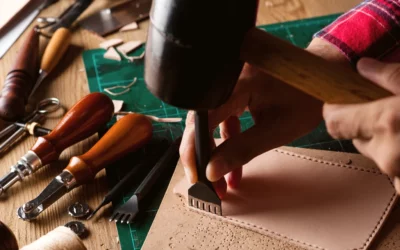
Starting a leather goods business in Geneva, workshop or shop: what Swiss law expects of a bag, a belt or a watch strap
Opening a leather goods business in Geneva, whether a workshop, a shop or a brand that has its pieces made elsewhere, takes no licence and no diploma. What Swiss law regulates is the product. A bag, a belt or a watch strap is a utility article, checked in Geneva by...
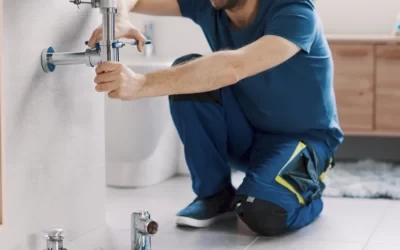
Starting a plumbing or sanitary company in Geneva: SIG authorisation, the 2026 collective agreement and getting paid
When you start a plumbing company in Geneva, your first counterpart is not the commercial register but the Services Industriels de Genève (SIG). There is no federal licence for sanitary installers, yet in Geneva a gas installation may only be installed, altered or...

Starting a cosmetics or perfume brand in Geneva: from formula to first bottle sold, what the law asks of you
Starting a cosmetics brand in Geneva requires no permit: the SCAV, the cantonal service in charge of consumer goods, issues neither sales licences nor certificates of conformity, and no federal register lists creams or perfumes. Responsibility sits entirely with the...

Starting an AI or digital agency in Geneva: what Geneva and EU clients will require before your first project
Opening an AI agency in Geneva requires no permit: neither the cantonal trade police nor the Confederation regulates the business, and Switzerland has no AI statute yet. The real constraints come from your clients. A private bank, a law firm or a medical practice in...

Swiss AMLA: the duties of directors and managers of a domiciliary company
A director or managing officer who sits professionally, on behalf of third parties, on the board of a domiciliary company already falls under the Anti-Money Laundering Act (AMLA): this officer activity is financial intermediation under the Anti-Money Laundering...

Setting up a securities firm in Geneva: the line with portfolio management, the capital and the procedure
In Geneva the question almost always arrives in the same form: do we need a portfolio manager licence or a securities firm licence? Both statuses sit in the same act, both are granted by the same regulator, and they are not alike. The difference comes down to one...

Swiss AMLA and domiciliation: domicile providers become advisers under the law
Since 1 October 2026, the Swiss Anti-Money Laundering Act (AMLA) has applied to domiciliation. Anyone who, on a professional basis, provides a legal entity with an address or premises as its domicile or registered office for more than six months is deemed an “adviser”...

Setting up a crypto exchange or digital asset company in Geneva: which regime applies to your activity
Founders arriving in Geneva with a crypto exchange, custody or payment project almost always open with the same question: how do we get the Swiss crypto licence? There isn't one. Switzerland has never created a crypto licence, a crypto exchange licence or a VASP...

Setting up a commodity trading company in Geneva: no licence, and the three boundaries that turn a trader into a regulated business
Geneva did not become one of the world's commodity trading capitals because of a licence, but because of the absence of one. No Swiss authority authorises commodity trading, no register records it, and no minimum capital attaches to the activity. A company that buys a...

Setting up a marketing, advertising or communication agency in Geneva: legal form, VAT, copyright, unfair competition and social charges
Opening a marketing agency in Geneva needs no permit. The cantonal trade police publishes the list of activities it licenses, and communication, advertising and marketing agencies are not on it; the industry regulates itself and no title is protected. An art director,...
Contact us
We look forward to hearing from you
Address
Rue Adrien-Lachenal 26
1207 Geneva
Suisse